SAILOR CH4656: battery, charging and load
The SAILOR CH4656 is considered when marine equipment needs a agreed battery backup node and power supply to connected consumers. This charger has four protected output lines, but its capabilities are determined by the total charging current, battery and load. For purchase, it is useful to describe the entire installation, keeping the exact configuration CH4656 in the application.
Request a quote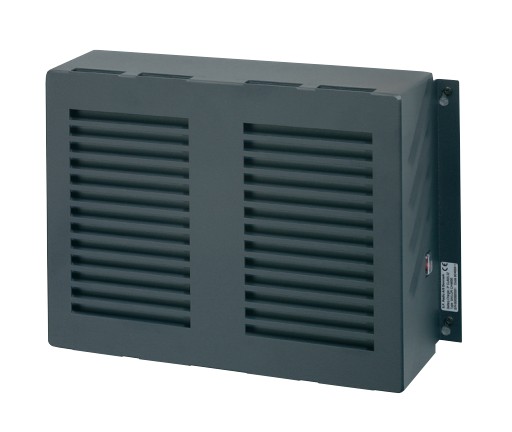
Charger in battery system
In the factory Technical Manual M4656COM, the Issue C/0508 is described as a standalone Battery Charger. The manual provides for the operation of the charger and battery in the uninterrupted power supply configuration. The reserve is created by the joint system: the charged battery provides energy, and the charger maintains its state and supplies the connected load within its capabilities.
Purchasing a single CH4656 does not determine how long a marine post will last. It requires actual consumers, their modes, and battery information. If the existing reserve has ceased to perform the task, it is useful to describe the observed result in the query and transmit the conclusion of the service, rather than pre-considering any problem as a basis for replacing only the charger.
What does 10A mean when the equipment is running?
The technical data shows a continuous current of the main charge of 10 A. Section 2.1 explains loading: When the consumption exceeds the charger’s capacity, the energy is taken from the battery and discharged. With less consumption, the battery recovers charge. Therefore, the presence of power supply AC does not prove that the battery is currently charged.
For supply, this is an important difference. a marine post can operate with a small load most of the time, and consume more during the transfer or switch on additional appliances. The charger is selected taking into account this work cycle. One sum of amps from labels or only the standby current do not describe the time to restore the reserve after use.
Provide a list of consumers with known long and short-term consumption. If the data is not available yet, specify the models and actual configuration for approval. The calculation of autonomy and recovery is performed for the installed system; the number 10 A is not converted into a promise of the same charge time for any simultaneously connected load.
Four lines and total battery reserve
The manufacturer provides four output lines with separate fuses. In the description of the principle of operation, they are associated with the battery and allow you to organize power supply consumers in the UPS configuration. This architecture refers to the distribution of power supply equipment; it does not mean four independent charging channels for arbitrary battery banks.
When agreeing on a new node, you need to understand which consumers should stay on these lines and which battery provides a backup. If an existing installation is being restored, list the retained devices and distribution elements. The quotation composition must be agreed with this task; the number of outputs does not, by itself, determine the complete scheme of the entire marine power supply.
Charge mode and applicable battery
The manual describes the automatic transition from the DC mode to maintaining the voltage after reaching a predetermined level. For the CH4656, it is important to align the battery and its support charge requirements. Settings of the device and work are performed by a specialist according to the applicable documentation, and the buyer needs a certain configuration and confirmed applicability to his battery part.
Technical data are called open or sealed lead-acid batteries and a nominal capacity of 20-120 Ah. This information cannot be transferred to any other chemistry by a single coincidence of voltage. In the request, specify the manufacturer and battery model, rated voltage, capacity and known condition. If the battery changes, its parameters will be coordinated with the charging unit.
The same documentation provides for the indication of the main and support charge, the output of the battery control and a separate AC network failure signal. It's different information about the system. If you want to keep the operator alert, name the operating control device and the necessary functions. The presence of one alarm does not confirm full control of the state of all batteries and consumers.
How to create a specific delivery
RadarStation S-80465611 own card shows SAILOR CH4656, New and Used status and price in the product card. The condition of a particular instance, manufacturer, marking, documents, inventory and final price is confirmed by quotation. The bottom guide of the overall card should not automatically be considered the price of any new device.
In general, list the charger, necessary accessories and retained equipment; the battery and work include only by agreement. Ask for the total price of the required set with a separate amount of work. Our catalogue image shows the CH4656 body, not the entire power supply backup node or the current warehouse lot.
For delivery, specify the city or port, the point of transfer of the service organization and the desired date. It can be St. Petersburg, Murmansk, Astrakhan, Vladivostok or the city of Kazakhstan. The useful result of the request is CH4656 for a specific battery and loads with clear kit boundaries, test conditions, price and deadline.
SAILOR CH4656 in our catalog
SAILOR CH4656 Charger, S-80465611.
The current price is indicated in the product card. the battery and work are included only by separate agreement. The lower reference point is not the price of any new instance.
Request a quotePrimary source: Thrane & Thrane: Battery Charger Technical Manual M4656COM, Issue C/0508, sections 1–2.
SAILOR 6080 and 6081: Power supply unit and charge system · All technical guide RadarStation