MG5436: when replacement has not changed the result
The MG5436 has already been delivered on an agreed application, the service has performed the work, and the remark on the radar remains. The buyer finds himself between two quick decisions: order another magnetron or immediately look for another node. Nothing follows from the lack of improvement. It is more useful to first link a specific delivery with a conclusion on the system and understand what the next expense is really justified.
Request a quote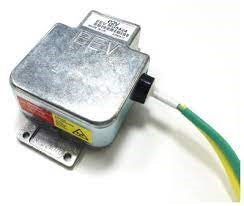
First save the question for which the detail was changed.
Suppose that the original application included “the image deteriorated”, and after the work came a short message “no changes”. For the next order, this is not enough: it is not known whether the service and the customer describe the result in the same way. We need a coherent history of one case: what was the reason for the appeal, what was confirmed by the specialist before the replacement and what result he recorded after it.
It is not a quotation to repeat measurements or change settings. The buyer needs a clear result of the work already done. For example: “The initial comment has been retained; the agreed component has been replaced; no further action has been concluded.” Such a description is more useful than the categorical “new magnetron is bad” or “a second one is needed”: it leaves open a technical question that has yet to be solved.
If the result of the previous work is not in writing, ask the contractor to formulate it before the new purchase. Otherwise, the next supplier will receive only the name MG5436 and the old complaint, and the history of the replacement will be lost. For the shipowner, this is a risk of repaying for an action whose meaning no one has explained.
The component and the entire radar have different confirmation levels.
The e2v MG5436 Issue 7 describes the magnetron as a component. It separately provides standard work and conditions of verification with the corresponding limits. This information helps to understand what the document refers to a particular product. They are not in themselves a conclusion about the state of the entire radar station after work.
Therefore, it is useful to separate two issues in the appeal. First: what information is there about the delivered copy - designation, marking, condition at delivery, accompanying documents? Second, what does the service say about the system after the replacement? Answers should relate to one case, but one document does not replace another.
Catalog photo helps to recognize the product, but does not prove the state of the sent copy. Similarly, the coincidence of the MG5436 inscription in the order and the datasheet does not explain the reason for the remaining remark. Before evaluating the available data, a component cannot be considered to be neither serviceable nor faulty only by the screen picture or by its name.
Life Test: information about production and instance
The Life Test section of e2v MG5436 Issue 7, page 2, describes the control of production through resource testing of randomly selected magnetrons. It does not follow from this section that each shipped instance has passed an individual resource test. The factory description of the control method and the documents of a specific delivery answer different questions.
On the same page, the End of Life Criteria for Oscillation 1 is separately listed. These are the criteria for the end of the resource test in this mode. They cannot be automatically transferred to the acceptance rate of a new product, the customer threshold of marriage or the promise of remaining service life. Applicability of the document and test results to a specific product is considered by a specialist.
When contacting the delivered MG5436, it is useful to ask what information is really available for this particular instance: designation and distinguishable marking, condition at delivery, accompanying documents, information about the performed checks with their conditions. You should not call a standard type sheet an individual Life Test protocol. At the same time, the absence of a separate individual resource protocol does not in itself prove a defect or forgery. For further solution, actual delivery documents and service conclusion related to one product are needed.
How to connect information without a dispute in a circle
It is convenient to collect a short appeal with the sequence "before work - delivery - performed work - result". Attach documents that already exist and indicate who performed the service. If the former and new components have distinguishable instance designations, keep this relationship in the description so that the photos and conclusions do not refer randomly to different items.
You do not need to ask the crew for dangerous checks, transducer autopsies or high-voltage circuit measurements. Missing technical information and the need for additional verification is determined by the specialist. The supplier can be asked to explain the specific delivery and the available documents; the presence of its own test stand or a specific service is not expected in advance.
The result of the exchange should be the next clear step with the responsible performer. This can be a clarification of the information already provided, an agreed check of the component or further examination of the system by the service. Here are options for coordination, not a ready-made diagnosis. Moving to buy another node requires a separate reason, not just a lack of effect from a previous expense.
When there is a reason for the next delivery
If the specialist recommends another position, ask for its exact designation and explain the relationship of the recommendation with the established result. The “send something instead of MG5436” application turns a specific task into a random selection. Even a repeat delivery of the same type should have a clear purpose and agreed terms, rather than a way to test the assumption at the buyer's expense.
Separately define the limits of the quotation: whether only the component is supplied, whether additional approval of documents is required and who is responsible for the subsequent work with the equipment. The cost and availability of these activities are confirmed separately. This helps to compare the quotation on the solution of one issue and not to accept the price of the part for the cost of the completed radar recovery.
MG5436 in RadarStation request
In your own card, the price is indicated in the product card. It refers to the catalogue item and does not mean that the reorder is already justified or that maintenance and inspection of the entire station is included. The price of a specific quotation, availability, condition, composition and terms are specified when applying. For the case after the replacement, first specify the previous delivery and the remaining note, and then ask to agree on the next step.
You can send a request from St. Petersburg, Vladivostok or another region. The location of the equipment and the contractor is important to inform immediately: the organization of the transfer of information and possible delivery depends on it. The application itself does not promise departure, repair or a certain result - these conditions are discussed according to the actual task.
Questions after replacement
Order a second MG5436 if nothing has changed since the replacement?
First, link the documents for a specific delivery with the result of the service. The lack of improvement does not justify a repurchase or establish a component malfunction.
Is it enough of a factory sheet instead of a radar report?
Nope. The sheet describes the type of component and the conditions for its verification. The result of the work of the entire station after maintenance should be considered separately by a specialist.
Main product
Magnetron MG5436
The current price is indicated in the product card. the price of the component is not the price of restoring the entire radar.
Request a quotePrimary document: e2v MG5436, Issue 7, June 2016: standard work and verification conditions; archival copy. It is given to distinguish information about the component and the result of the system operation; the order of service is determined by a specialized specialist.